Driving the French Alps in Style: A 2026 US Traveler's Guide to Luxury SUV and Mercedes-Benz Rentals in Courchevel
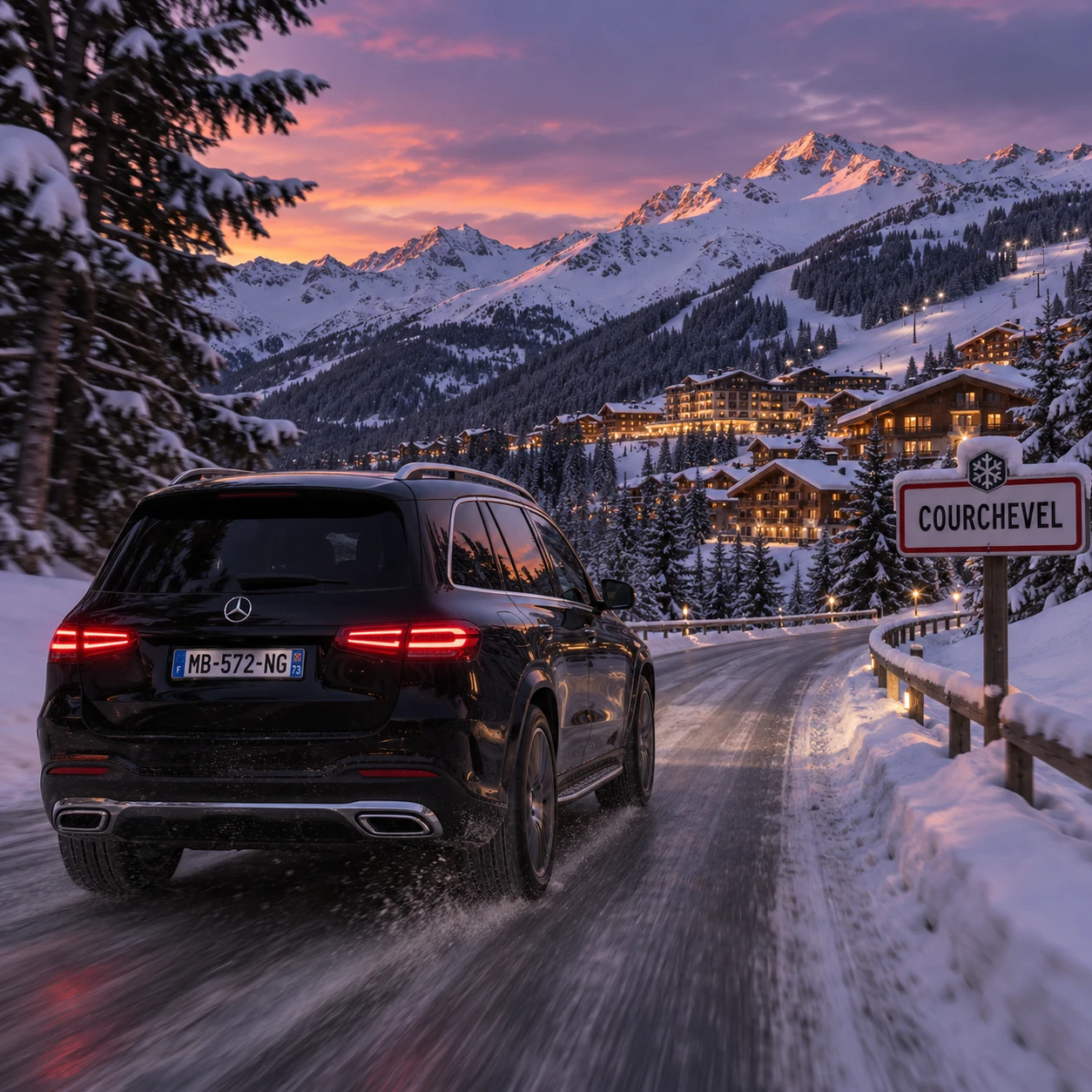
Geneva, January 2026, off a red-eye from New York or Chicago. Your head is still somewhere over the Atlantic. Two hours later you're on the first snow-packed switchback above Moûtiers — a drop on one side, a wall of plowed snow on the other.
I've watched that scene play out plenty of times. The travelers who enjoy it are almost always the ones who thought about the vehicle before they left home.
In Courchevel the rental car isn't a transfer. It's part of the trip. The wrong vehicle turns a scenic climb into a white-knuckle ordeal; the right one makes the whole mountain feel easy. What follows: the SUV-versus-sedan physics, how to pick the right Mercedes-Benz body style, which winter-tire rules actually apply, how chalet and airport delivery works, and how to size up the SUV lineup against the wider luxury fleet before you book anything.
Why an SUV Beats a Sedan on Snow-Chained Mountain Roads
No engineering degree required. Three things decide it.
- Ground clearance. Chalet driveways are rarely plowed down to the tarmac, and village lanes come lined with snow banks. A sedan can beach itself on a ridge of packed snow that an SUV simply rides over.
- Weight and track width. Heavier plus wider equals calmer on packed snow. Less nervous in crosswinds, less twitchy through cambered bends.
- All-wheel drive. A good AWD system sends torque to the wheels with grip before a wheel spins, not after. Cold, steep start? You feel that difference instantly.
The trap I see most often: someone books 'a luxury car' for a ski trip and ends up with a rear-wheel-drive sedan. Looks lovely in the photos. On a 10 percent gradient with fresh snow, it's the car holding up traffic while the driver hunts for the chains.
The Route de la Tarentaise and the Final Climb to 1850
First stretch is easy. Autoroute from Geneva or Chambéry toward Albertville, then on to Moûtiers, where the valley road ends and the mountain starts. From there it climbs through Saint-Bon, Le Praz and La Tania — long stretches of steady gradient, tight hairpins — before the final push up to Courchevel 1850.
Clearance matters most on that last stretch to your chalet. Engine braking matters on the way down, when you want the drivetrain holding your speed instead of you leaning on the brakes. All-wheel drive matters on every restart on a slope. And if you're heading for the Altiport road or into the narrow lanes of Courchevel Village, you'll be glad of something capable that isn't oversized.
Want to see what's on offer before reading further? The Car Rental Courchevel — SUV collection is the quickest way to check which all-wheel-drive options are actually free for your dates.
G-Class, GLE, or V-Class — Matching the Mercedes-Benz to Your Group
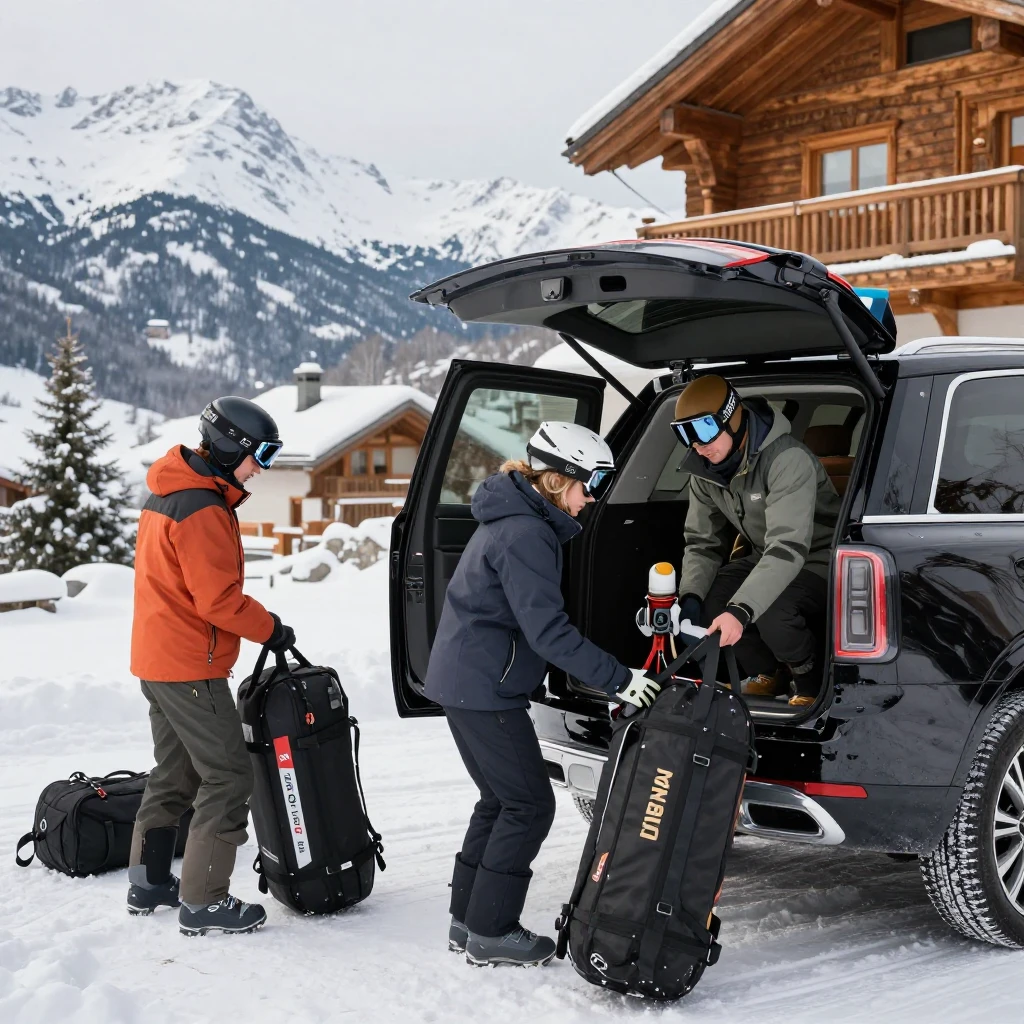
Forget spec sheets for a minute. Think in people and gear. A ski bag is roughly 190 cm of awkward. Add boots, helmets, duffels and a chalet grocery run, and the real question becomes how many people and how much stuff you're moving — and how easy it is to load all of that wearing gloves at minus eight.
Three questions to ask yourself:
- How many people are riding, and does anyone need real legroom for a two-hour climb?
- Are you carrying ski bags, or renting equipment in resort?
- Do you want a statement car, a quiet cruiser, or a people-and-gear mover?
G-Class and GLE — Capability, Presence, and the Couples-or-Small-Family Case
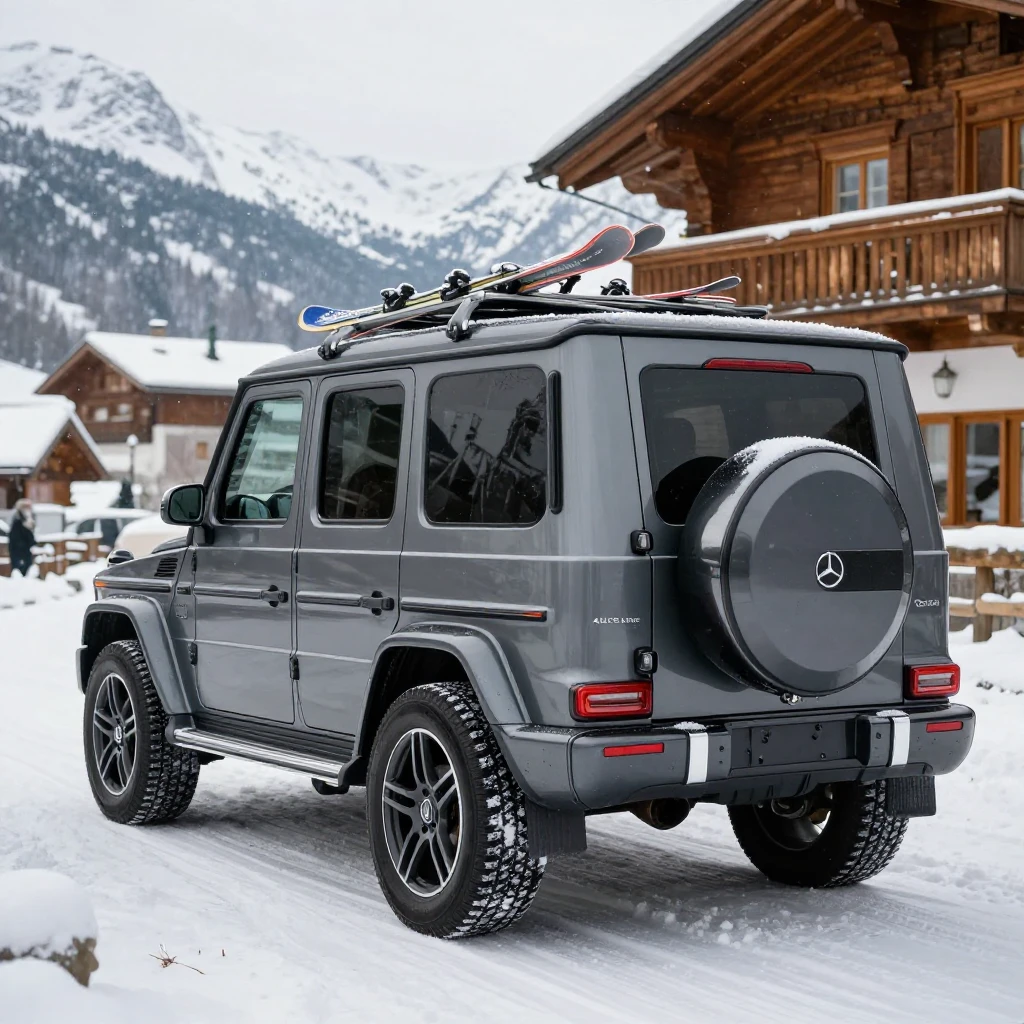
The G-Class is the one people photograph. Boxy profile, locking differentials, and that sense nothing on the mountain will bother it. It suits couples or a small family who want the statement and the capability and don't mind a firmer ride and thirstier fuel use on the autoroute.
The GLE is the civilized choice. Quieter and more efficient over the long highway section, genuine all-wheel drive, and a larger, lower boot that's far easier to load with skis and bags. If arriving relaxed after a long flight is the priority, I'd lean GLE. For model-by-model detail, have a look at the Mercedes-Benz rental lineup and compare what's available for your travel week.
V-Class — The Group and Gear Hauler
The V-Class is the sleeper pick. Two families, or six people with skis, boots and luggage — nothing else in the lineup swallows people and equipment so gracefully. Sliding doors help in tight parking spots, and everyone gets a proper seat instead of a fold-down compromise.
Where it gives up ground is in the village. That longer wheelbase makes hairpins and narrow lanes more deliberate, and parking near a busy lift base can turn into a puzzle. Big group? Accept the trade-off. Plan your drop-offs around it.
Winter Tires, Chains, and What French Law Requires in 2026
France's Loi Montagne sets the rules. In designated mountain zones, November through March, vehicles must carry either winter tires marked with the 3PMSF symbol (the three-peak mountain snowflake) or snow chains. The obligation sits with the driver, whatever your rental paperwork says. Not compliant, and you can be fined or turned around at a checkpoint.
There's a practical difference between 'winter tires fitted' and 'chains in the boot.' Winter tires are on the car the whole time and handle cold tarmac, slush and packed snow without any fuss. Chains are the add-on you fit when things get severe — and fitting them at the roadside in a storm is nobody's idea of a holiday. A proper rental should arrive already compliant: winter tires on, chains in the boot as backup. Get that confirmed in writing before you pay.
Small confession. Chains may be legally required on board and still physically unnecessary on most days. The Three Valleys roads get cleared aggressively, and with decent winter tires and AWD you'll often never touch them. Carry them anyway.
Delivery to Chalets and Airports — How It Actually Works
This is the part US travelers underestimate. A chalet-door key handover in a snowstorm is a very different experience from a rental counter in Denver. Delivery means the car comes to you — a huge relief after a long journey — but it also means timing and communication matter.
- Airport delivery. Geneva, Lyon and Chambéry are the common options. Give your flight number so delays on arrival day get tracked, not guessed at.
- Chalet delivery. Share the exact address, access instructions and a local phone number that actually works on your US plan.
- The Altiport. Altitude and weather can limit flights, so don't build a tight schedule around a private arrival without a road backup.
Paperwork: US driver's license, passport, international driving permit, and a credit card in the driver's name. Premium vehicles carry deposit holds, sometimes substantial ones — check your card's available limit before you fly. A hold that fails at the chalet door is a very awkward conversation.
Comparing the SUV Collection Against the Full Luxury Fleet
Audit both lists on the same criteria before you commit. I do it as a quick side-by-side; takes about ten minutes.
- Drivetrain: AWD or 4x4, not rear-wheel drive.
- Winter-tire fitment: 3PMSF tires confirmed, chains on board.
- Boot volume: Will skis, boots and bags actually fit?
- Seating: Real seats for everyone, not just on paper.
- Delivery fee and deposit: Total cost, not just the daily rate.
Start with the Car Rental Courchevel — SUV collection, which is where most winter travelers should land. Then browse the luxury car fleet for the full range, so you can see what you'd be choosing between and why.
A sedan or coupe does make sense sometimes. Summer trips on dry roads. Annecy and Geneva day runs. A photo shoot where the car is the star. For a February week with a family and ski bags? Rarely.
Booking Mistakes US Travelers Make in Courchevel
- Booking a sedan because it's 'luxury.' Luxury on the mountain means capability first.
- Assuming a US credit card covers the insurance excess. Plenty of cards exclude premium vehicles or overseas rentals. Read the policy and ask for it in writing.
- Skipping the international driving permit. Cheap, easy to sort at home, and it ends any argument at a checkpoint.
- Worrying only about chains. They may be legally required and are rarely used. Winter tires matter more day to day.
- Booking in December for a February half-term week. Far too late for the best vehicles.
A sensible 2026 timeline: for peak weeks — Christmas, New Year, February half-term — reserve four to six months ahead. Standard winter weeks, two to three months is comfortable. Confirm delivery details and flight numbers about two weeks out, then recheck your card's deposit limit a few days before you fly.
Conclusion
Pick the vehicle for the road, not the brochure. The process is simple enough. Choose your body style by group size and gear: G-Class for statement and capability, GLE for a quieter all-round cruiser, V-Class for groups and luggage. Confirm winter-tire compliance and your delivery point in writing. Then compare the SUV lineup against the wider fleet before you commit.
Do that and the climb above Moûtiers stops being the price you pay for the trip and starts being part of it. Reserve early for the 2026–27 peak weeks — the best all-wheel-drive vehicles go first — and arrive in the Alps ready to enjoy the mountain.