Exploring California’s National Parks from Los Angeles: Yosemite, Sequoia, and Beyond
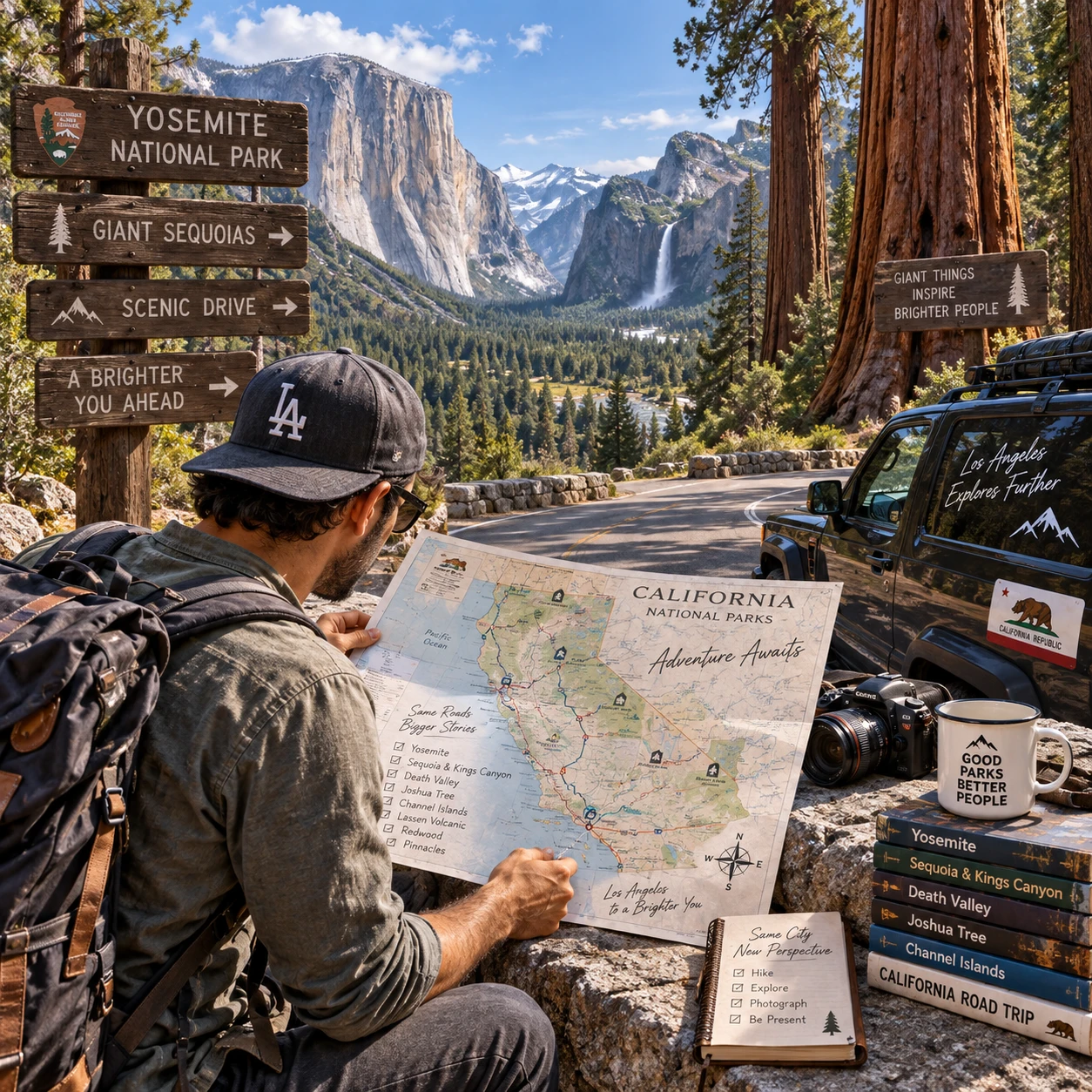
Los Angeles is a useful starting point for a California national parks road trip, but the parks are spread across a vast and varied state. Yosemite’s granite cliffs, Sequoia’s giant trees, Joshua Tree’s desert landscapes, and Death Valley’s extreme terrain call for different routes, seasons, and trip lengths.
The key is to choose a park for the experience you want, then build the drive around it. A long weekend may suit a closer desert park, while Yosemite or a Yosemite–Sequoia loop usually rewards a longer itinerary and at least a few nights away.
Choosing the Right California National Park
Choose a California national park by matching its landscape, activities, and travel time to your available days. From Los Angeles, Joshua Tree is often the simplest park trip, while Yosemite and the Sierra Nevada parks require more planning and driving.
Use this quick comparison to narrow your options:
- Yosemite National Park: Granite cliffs, waterfalls, alpine scenery, and famous valley viewpoints. Best for first-time visitors who want classic mountain landscapes and hiking.
- Sequoia and Kings Canyon National Parks: Giant sequoia groves, deep canyons, and high-country scenery. Choose them for forest walks and a less valley-centered Sierra experience.
- Joshua Tree National Park: Desert trails, boulder formations, and distinctive Joshua trees. A strong choice for a shorter trip, stargazing, or spring and fall hiking.
- Death Valley National Park: Vast desert basins, colorful badlands, and dramatic elevation changes. Plan for heat, long distances, and careful preparation.
Drive time is only part of the decision. Mountain roads, traffic leaving Los Angeles, park entrances, and internal distances can all add hours. If your priority is seeing major sights without rushing, spend more time in one park rather than counting several park names as a successful itinerary.
Yosemite: Waterfalls, Valley Views, and Mountain Trails
Yosemite is known for Yosemite Valley’s granite landmarks, waterfalls, and mountain trails, with additional scenery across the park’s high country. For a first visit, plan around the Valley, allow time for traffic and parking, and check which roads are open.
In the Valley, visitors can see El Capitan, Half Dome, and Yosemite Falls, then explore trails ranging from short walks to demanding climbs. Waterfall volume changes through the year, and many falls are most powerful during spring snowmelt. Later in summer, some may have much less water.
Yosemite is a large park, not a single viewpoint. Tioga Road provides access to high-country areas when open, but it closes seasonally in many years because of snow. Conditions and opening dates vary, so do not build an itinerary around a particular route until the National Park Service confirms it is accessible.
From Los Angeles, the drive can take much of a day depending on your route, traffic, and destination within the park. Staying nearby or inside the park makes early starts easier, but lodging and campgrounds can book far ahead. For a first trip, two or three nights gives you more breathing room than a day visit.
Sequoia and Kings Canyon: Giant Trees and High-Country Scenery
Sequoia and Kings Canyon are neighboring national parks that protect giant sequoias, mountain landscapes, and deep canyons. They can be paired on one trip, but winding roads and distances between sights mean they need more time than a map may suggest.
Sequoia’s best-known draw is its giant sequoia groves, including the General Sherman Tree, along with scenic areas such as Moro Rock. Kings Canyon offers a different feel, with a deep glacial valley, rivers, and access to rugged high-country terrain. The parks share management, and visitors often plan them together, but each has its own roads, facilities, and seasonal access considerations.
These parks suit travelers who want forest walks and Sierra scenery without making Yosemite Valley the center of the whole trip. They are not a quick detour from Los Angeles: the route, park roads, and stops can fill a day. Allow at least two nights if you want to see highlights in both parks without spending the entire visit in the car.
Check current conditions before setting out. Snow, construction, and other closures can affect access, and some park roads are steep or narrow. Choose lodging based on the sights you plan to visit rather than assuming one base will make every area close.
Other Parks to Consider from Los Angeles
Joshua Tree and Death Valley are distinct desert alternatives for Los Angeles travelers, with different levels of heat, distance, and trip planning. Joshua Tree often works well for a shorter getaway; Death Valley calls for extra attention to water, fuel, weather, and road conditions.
At Joshua Tree, look for hiking among rock formations, desert plants, and dark skies after sunset. Spring and fall are generally more comfortable for outdoor activity than the hottest part of summer, though conditions can still change quickly. Bring water and check trail and access updates before leaving town.
Death Valley’s scale is part of the experience. A visit might include a desert basin, a viewpoint, or colorful geological formations, but driving between areas takes time. Extreme heat can make strenuous outdoor activity unsafe, particularly in summer. Plan short stops, carry ample water, and check official alerts before traveling.
Neither park should be treated as a casual add-on to a Sierra itinerary. Pair destinations only when the route and available days make sense; otherwise, give one desert park a focused visit. For current planning details, consult the National Park Service, which publishes park alerts, seasonal updates, and visitor information.
Planning a National Park Road Trip from Los Angeles
Plan a California road trip from Los Angeles by selecting one main park, estimating the full door-to-door drive, and choosing overnight stops before adding detours. Yosemite, Sequoia, and Kings Canyon generally make more sense as a dedicated Sierra trip, while Joshua Tree or Death Valley can anchor a separate desert journey.
Start by checking the route to your actual destination, not just the park’s nearest town. Los Angeles traffic can affect departure time, and park entrances may be far from the attractions you want to see. Add time for fuel, food, breaks, and slow mountain roads; a navigation estimate rarely includes every stop or seasonal delay.
For a Yosemite and Sequoia combination, plan a loop only after confirming road access and realistic driving legs. You may need to leave the parks and travel around mountain terrain rather than crossing directly between them. If you have only a few days, staying in one park often yields a better visit than trying to cover both.
Book lodging and campgrounds early when traveling in busy periods. In-park accommodation can reduce daily driving, but it may cost more and sell out. Staying outside a park can offer more choices, though you may face longer drives, entrance queues, and less flexibility for sunrise or evening outings.
Timing, Reservations, and What to Check Before You Go
Before visiting any California national park, verify current reservations, entrance rules, weather, and seasonal road conditions with the National Park Service. Access can change, so treat old schedules and past trip reports as background rather than a guarantee.
Use this pre-departure check a few days before leaving and again on the day of travel:
- Park alerts: Look for closures, construction, fire information, and changes to entrance or shuttle operations.
- Reservations and fees: Confirm whether your dates require an entry reservation, campground booking, or timed access. Rules differ by park and can change by season.
- Weather and seasonal roads: Check forecasts and official road updates, especially for Yosemite’s high country and Sierra routes affected by snow.
- Supplies and services: Identify where to refuel, buy food, and find water. Services may be limited inside and near remote areas.
The best season depends on the park and your priorities. Spring can bring strong waterfalls in Yosemite, while high-elevation roads may still be closed. Summer opens more mountain access but can bring crowds and heat. Fall often offers comfortable desert weather, and winter can bring snow, closures, and special conditions in the Sierra. Check the forecast for your specific dates instead of relying on a general seasonal rule.
Frequently Asked Questions
Which California national park is easiest to visit from Los Angeles? Joshua Tree is often the easiest choice for a short trip because it is generally closer than the Sierra parks. The exact drive depends on your starting point, traffic, and which entrance or destination you plan to visit.
Can Yosemite and Sequoia fit into one trip? Yes, but allow several days and plan the route carefully. They are not next-door attractions connected by a quick park-to-park drive; road access, distances, and overnight locations matter.
What is the best season to visit California’s national parks? There is no single best season for every park. Spring is popular for Yosemite waterfalls, summer for many high-country routes, and fall for desert hiking, but closures and weather vary each year.
Should I stay inside or outside the parks? Staying inside usually saves driving time and helps with early starts, but lodging is limited and often needs advance booking. Outside stays can provide more options, with the trade-off of longer commutes and possible delays at park entrances.