Sustainable Travel in California: Eco-Friendly Tips and Destinations

Sustainable travel in California means exploring the state while reducing emissions, waste, water use, and pressure on local communities. From Los Angeles neighborhoods and farmers’ markets to coastal towns, California state parks, and national parks, small planning choices can make a meaningful difference.
Why Sustainable Travel Matters in California
Sustainable travel matters in California because the state combines heavily visited cities, drought-prone regions, fragile coastlines, forests, deserts, and wildlife habitats. Responsible tourism helps protect these places while keeping visitor spending in local communities.
California’s popularity creates practical pressures. Traffic increases air pollution and congestion, popular trails can suffer erosion, and water-intensive travel practices are a poor fit for regions that regularly face drought. Coastal ecosystems, redwood forests, desert habitats, and mountain areas also respond slowly to damage caused by litter, off-trail walking, noise, and unmanaged crowds.
The goal is not to avoid travel altogether. It is to make better decisions about how you arrive, where you stay, what you buy, and how you behave outdoors. A visitor who takes rail or public transportation for part of a trip, carries reusable supplies, books a locally owned room, and visits less crowded areas can reduce impact without giving up the California experience.
Before visiting a park or protected area, check official guidance from agencies such as the California State Parks system or the National Park Service. Conditions, reservations, road access, wildfire restrictions, and conservation rules can change quickly.
How to Travel More Sustainably from Los Angeles
To travel more sustainably from Los Angeles, combine public transportation, rail, walking, cycling, carpooling, and electric vehicles according to the route. The lowest-impact option is usually the one that avoids a private solo-car journey while still being realistic for your itinerary.
Use public transportation for urban trips
Los Angeles is easier to explore without a car than its reputation suggests. Metro trains and buses connect many attractions, while local bus networks serve neighborhoods that rail lines do not. Walking between nearby stops, attractions, cafés, and shops can turn a transit day into a more immersive Los Angeles travel experience.
Public transportation works especially well for trips centered on Downtown Los Angeles, Hollywood, Koreatown, museums, sports venues, and selected beach connections. Build extra time into the schedule, carry a charged phone, and confirm service alerts before leaving. Choosing transit for only one or two daily journeys is still useful if a completely car-free itinerary is impractical.
Choose rail, shared rides, or cycling beyond the city
For regional travel, compare rail and bus routes before renting a car. Amtrak California services, Metrolink, and connecting regional transit can be useful for selected destinations, although schedules and last-mile connections vary. A train trip may require a local bus, rideshare, or bicycle at the other end.
For routes without convenient transit, carpooling spreads fuel use among several travelers. Cycling can work for beach paths, neighborhood exploration, and compact communities, but it should match the terrain, weather, and road conditions.
Plan electric-vehicle road trips carefully
Electric vehicles can reduce tailpipe emissions, but an EV road trip still requires thoughtful planning. Map charging stations along the route, confirm connector compatibility, and allow time for busy chargers or slower charging speeds. Do not assume that a remote park, mountain town, or desert destination has reliable charging nearby.
Choosing an electric vehicle for a long-distance trip means accepting extra planning and occasional charging delays. In return, it can be a practical lower-emission option when public transportation cannot reach trailheads or small communities. Drive efficiently, avoid unnecessary idling, and use shared transport when several people are traveling together.
Eco-Friendly Places to Visit in California
Eco-friendly places to visit in California include accessible urban green spaces, coastal communities, California state parks, national parks, and nature-focused destinations that can manage visitors responsibly. Choose places where you can follow clear rules, stay on designated routes, and contribute to the local economy.
In Los Angeles, urban green spaces such as Griffith Park, the Los Angeles River corridor, regional botanical gardens, and neighborhood parks offer lower-impact alternatives to long drives. Visit early or on weekdays when possible, use public transportation where practical, and remain aware of heat, fire restrictions, and wildlife guidance.
California state parks provide varied experiences, from beaches and oak woodlands to redwood groves and desert landscapes. Check whether a site requires reservations, has limited parking, or recommends shuttle access. Arriving outside peak periods can reduce congestion and improve the experience for residents and other visitors.
National parks such as Joshua Tree, Yosemite, Redwood, Sequoia, and Kings Canyon reward careful planning. Popular parks may experience full parking lots, timed entry requirements, seasonal closures, or scarce lodging. Consider visiting shoulder seasons, using available shuttles, and selecting established campgrounds rather than informal roadside sites.
Coastal communities can support responsible tourism when visitors spend at locally owned restaurants, refill water bottles, respect beach closures, and avoid disturbing tide-pool animals or nesting birds. A quieter destination is not automatically impact-free, so research local capacity before arriving.
Choosing Greener Places to Stay and Eat
Choose eco-friendly accommodations and food businesses by checking specific practices rather than relying on vague green labels. Look for transparent information about energy, water, waste, transportation, and local sourcing.
Evaluate accommodations by their actual practices
Hotels, hostels, guesthouses, vacation rentals, and campgrounds can all support sustainable travel when they manage resources carefully. Useful questions include:
- Does the property offer efficient lighting, recycling, refill stations, or renewable energy?
- Can guests decline daily linen and towel changes?
- Does it provide transit information, bicycle storage, or EV charging?
- Does the property explain water-saving measures without shifting responsibility entirely to guests?
- Is it locally owned, or does it employ and purchase from nearby businesses?
These details are more meaningful than a generic claim that a hotel is sustainable. A central accommodation near transit may also be a greener practical choice than a remote property that requires driving for every meal and activity. However, central locations can cost more, so compare the room price with transportation savings.
Support local food systems
Farmers’ markets, independent cafés, neighborhood restaurants, and regional food producers help keep visitor spending in California communities. Bring a reusable cup and container where accepted, order realistic portions, and choose tap water when it is safe and available.
Local food does not guarantee a lower footprint, and imported products can still appear at a farmers’ market. Ask vendors about seasonal produce, purchase only what you can use, and avoid creating food waste during road trips. Eating plant-forward meals more often can also reduce resource use without requiring an entirely vegetarian itinerary.
Practical Tips for Low-Impact California Adventures
To reduce your impact during a California adventure, carry reusable essentials, conserve water, stay on trails, respect wildlife, and follow Leave No Trace principles. Preparation matters most in hot, remote, or heavily visited areas.
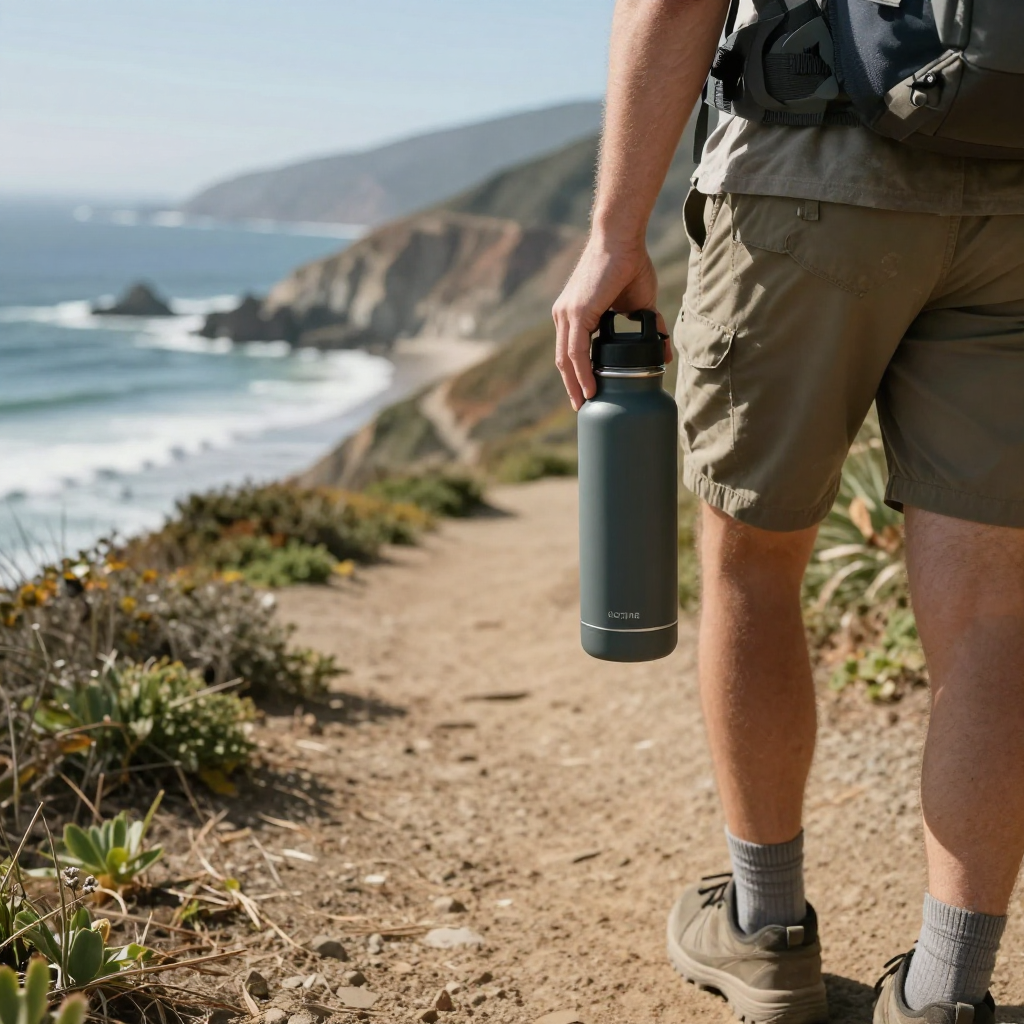
- Reduce single-use waste: Pack a refillable bottle, lightweight food container, reusable utensils, and a small rubbish bag. Take all waste with you when bins are full or unavailable.
- Conserve water: Take shorter showers, reuse towels, refill at approved stations, and never empty soap or food into natural waterways. In dry regions, carry enough water rather than assuming a trailhead has supplies.
- Stay on durable surfaces: Use marked trails, boardwalks, campsites, and viewpoints. Cutting switchbacks damages soil and can widen erosion channels.
- Protect wildlife: Observe animals from a safe distance, never feed them, secure food, and keep dogs leashed where required. Quiet behavior matters around nesting birds and marine mammals.
- Prevent fires: Follow current fire restrictions, use designated facilities only, and check wildfire conditions before entering forests, mountains, or grasslands.
- Respect communities: Keep noise low, obey parking rules, avoid blocking driveways, and support local businesses without treating residential neighborhoods as scenery.
Leave No Trace principles provide a useful decision framework: plan ahead, travel and camp on durable surfaces, dispose of waste properly, leave what you find, minimize fire impacts, respect wildlife, and be considerate of others. The framework applies to beaches and city parks as well as backcountry campsites.
Sample Sustainable California Travel Ideas
Sustainable California itineraries work best when they group nearby activities, use lower-emission transportation, and avoid rushing between distant destinations. The following concepts can be adapted to current schedules, weather, and park conditions.
Los Angeles car-free day
Use Metro to reach a museum or cultural district, walk between nearby attractions, eat at a locally owned restaurant, and finish with a neighborhood farmers’ market or urban park. This plan keeps the day compact and avoids parking costs as well as a series of short car trips.
Coastal weekend
Travel by rail or shared vehicle to a coastal community with walkable lodging. Spend the weekend walking, cycling, visiting local businesses, and exploring designated beach or bluff trails. Check tide, wildlife, and beach-access notices before visiting sensitive areas.
Inland park escape
Share an EV or conventional vehicle with several travelers, charge or refuel at planned stops, and reserve an established campsite or locally owned accommodation. Choose one primary park rather than trying to cover several distant sites in two days. That slower pace reduces driving and leaves more time for responsible exploration.
Longer national park journey
Combine rail or intercity bus travel with a rental car used only for the remote portion. Visit during a less crowded period, confirm reservations and shuttle information, and carry reusable supplies. If conditions are poor, change the destination rather than ignoring closures or safety restrictions.
A Simple Checklist for Responsible Travelers
A responsible California travel checklist covers planning, transportation, lodging, activities, food, waste, and conservation before you leave home. Use it to turn good intentions into specific actions.
- Plan: Check weather, wildfire conditions, park rules, reservations, and seasonal closures.
- Transport: Compare public transportation, rail, carpooling, cycling, walking, and EV routes before booking a private car.
- Stay: Ask accommodations about water, energy, waste, transit, and local employment practices.
- Eat: Visit local businesses and farmers’ markets, choose suitable portions, and carry reusable items.
- Explore: Use established trails and campsites, obey wildlife rules, and avoid fragile or closed areas.
- Conserve: Save water, reduce single-use packaging, and pack out rubbish.
- Give back locally: Spend money with community businesses and follow neighborhood expectations.
What is the most sustainable way to travel around California? For urban areas, public transportation, walking, and cycling usually have the lowest impact. For remote parks, shared travel or a carefully planned EV may be more realistic than a solo gasoline-car journey.
How can travelers reduce waste and water use in California? Carry refillable supplies, avoid over-ordering food, decline unnecessary linen changes, take shorter showers, and pack out waste when facilities are limited. Most of all, match your plans to local conditions rather than assuming every destination can absorb unlimited visitors.